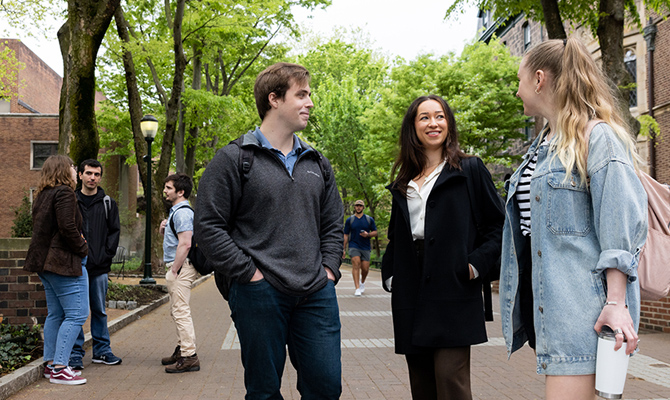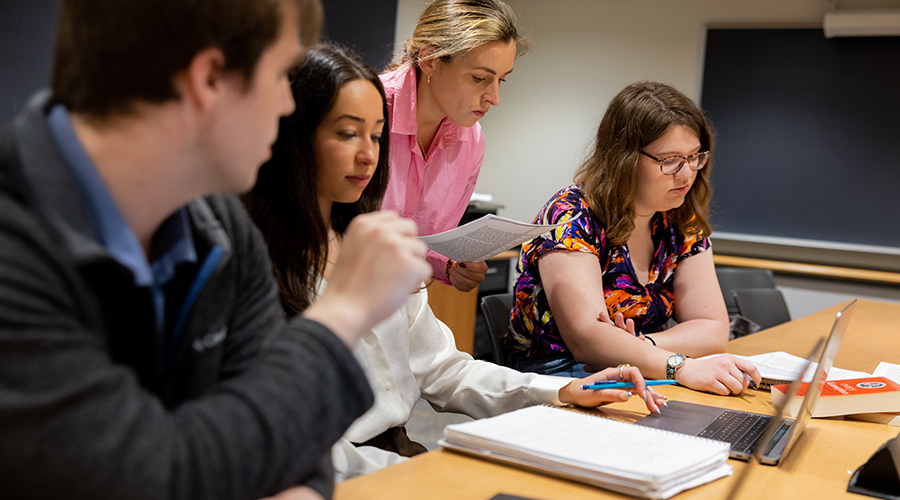
You will spend the year studying and learning with a group of around 10-15 peers who share similar career and academic goals.
During the summer, all admitted students must do virtual on-boarding and pre-session advising meetings.
You will receive individual advising from the classical studies program director throughout the year, along with another faculty advisor from the department, who will be matched to your individual interests and specialty as much as possible. The program director and faculty advisors take a student-by-student approach, offering the open conversation and personal advising relationship you need to help you determine the path that meets your needs.
All students in the Classical Studies Post-Baccalaureate Program are required to take one Latin and one Greek course per semester. Depending on your language background, and in consultation with the program director after your placement examinations, you will determine the levels of Latin and Greek suited to your needs. Some of our students also enroll in extra courses, most commonly German or courses in related fields such as ancient history, archaeology, religious studies, or linguistics.
Workshops and lectures
Together with the other members of your cohort, you will attend mandatory weekly workshop sessions throughout the fall. This noncredit proseminar series provides an opportunity for you to hear from the program director and members of the classical studies faculty as they discuss the particulars of applying to graduate programs. In addition, current graduate students in classical studies and related fields are often guests at these workshops. Some are alumni of the post-baccalaureate program, and all can offer specialist advice from their own personal experiences and expertise in graduate admissions, graduate study, and scholarship on the ancient Mediterranean world.
You are also encouraged to take advantage of the many exciting opportunities to engage in the broader intellectual community around Penn. You are invited to attend as many outside lectures as possible, including the Classical Studies department’s weekly Thursday afternoon colloquium series.