Chief of Staff, Baton Rouge Youth Coalition
Master of Applied Positive Psychology, University of Pennsylvania ’24
Bachelor of Arts in Public Relations, Louisiana State University ’09
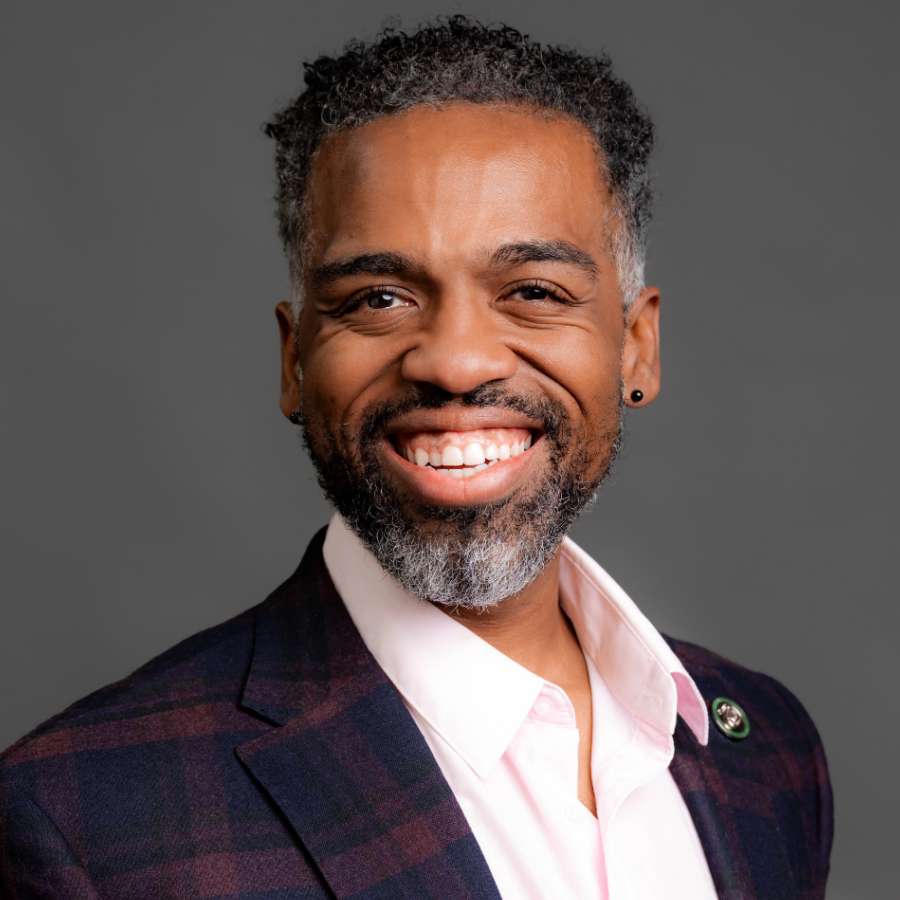
“Coaching or mentoring has always been a part of my background in some respect,” shares Josh Howard (Master of Applied Positive Psychology ’24). In college, he served as manager for LSU men’s basketball team. In his twenties, he worked as a youth pastor. Today, Josh is chief of staff at the Baton Rouge Youth Coalition (BRYC) and an adjunct professor at his alma mater. When he was ready to take his professional work further, the Master of Applied Positive Psychology (MAPP) program at Penn offered Josh both the academic structure and the creative inspiration to expand the ways he helps people thrive.
Josh was born and raised in Baton Rouge, Louisiana. After studying mass communications and public relations at LSU, he worked as an independent communications consultant before pivoting to the nonprofit and education field. In his leadership role at BRYC, a post-secondary success program for 8th through 12th graders, Josh wears many hats, from working directly with program participants to developing the talent on his team. As an adjunct professor at LSU, Josh teaches a 300-person lecture on social media and digital branding in the Manship School of Mass Communication and a philosophy and ethics course in the Roger Hadfield Ogden Honors College.
“I applied and was overjoyed when they said, yes, you get to join us here.”
Josh first learned about Penn’s MAPP program while working with an executive coach several years ago. Discussing graduate school as a next step, his coach suggested that Josh might want to study positive psychology at Penn and learn about the very coaching techniques they were practicing. Josh was instantly curious about the psychology sub-discipline. “I love psychology. That’s my mom’s background,” he shares. “And I wanted to do something positive, something that was asset-based.”
When he looked into the Penn program, it felt like a good fit. “I’m very pragmatic, but I always view the world from an optimistic point. I have to have that enduring, everlasting hope. And that is probably what ultimately shifted me away from traditional psychology and into positive psychology.”
Josh envisioned the degree helping him infuse the after-school programs at BRYC with positive youth development and educational strategies, as well as develop effective coaching plans for his staff.
“I applied and was overjoyed when they said, yes, you get to join us here,” he says. “It was just at the right pivotal time that I needed for myself, personally and professionally.” Josh began the program in fall 2023.
“I came in pretty green,” he says about his start at MAPP. While he had been practicing positive psychology techniques with his coach, such as adopting a growth mindset and assessing personal strengths, many of his classmates had already read books on the scientific field. “I took it all in as a keen student, soaking it all in without any pretense, like the type of students that I get to teach,” he says.
Josh admits, however, that he initially found the MAPP environment overwhelming. Chats and activities were bursting with emotion-filled responses from the more effusive members of his 50-person cohort. “I struggled with that,” he shares. When it comes to positive emotional expression (a key component of the MAPP curriculum) Josh’s character is introverted and introspective. “My best friends call me ‘Dial-up’ because it takes me a second to process my emotions,” he says. Josh jokes that, for a moment, he thought a more dispassionate degree, like an MBA, might suit him better.
Instead, Josh relied on his experience as a teacher to adapt. “I applied a lot of the same principles that we tell our graduating seniors when they go to college: continue to be yourself, understand who you are as an individual, and know that you're going to change, and recognize that you don't have to know it all on the first day.” He also set out to build community. “I had to find people in my MAPP cohort who could understand me. That was a game changer, finding that cohort within the cohort,” he says. “There's a great handful of students that I still keep in touch with. We have taken trips together, and we’ve connected in ways that really made MAPP salient for me.”
“I came in and thought, my goodness, these are great educators! This is great content. These are caring individuals. These are professionals who are doing this day in and day out. And I have the opportunity to learn from them.”
Carving out the space from his full-time chief of staff role and part-time teaching to dedicate to MAPP was another challenge. At BRYC, he had to delegate some responsibilities, which, he found, allowed his team to step up and shine in new roles. During the spring semester, he was able to reduce his teaching workload at LSU. And he kept up his motivation and engagement over the year-long program by focusing on the ‘applied’ elements of the curriculum, bringing MAPP lessons back to his work as often as possible—like teaching his college-bound students deep breathing techniques and how to recognize and manage their emotions.
As an educator himself, Josh paid particular attention to the pedagogy of his MAPP professors as he moved through the year. “I came in and thought, my goodness, these are great educators!” he recalls. “This is great content. These are caring individuals. These are professionals who are doing this day in and day out. And I have the opportunity to learn from them.”
For his capstone, entitled Flourishing Online: Social Media for Well-Being, Josh built on the curriculum for his LSU course in social media. “I wanted something practical that I could put into use right away,” he says. Josh rooted the project in the theory of well-being called PERMA™ (an acronym for the five building blocks of flourishing: positive emotion, engagement, relationships, meaning, and accomplishment) and developed a lesson plan that teaches students how to engage with social media productively and positively. “Social media has so much of an opportunity to be used for good, and I feel like most of us go into it with that intention,” Josh says, we just need the right tools and understanding.
The four-part mini course is complete with a slide deck, instructor scripts, quizzes, and self-assessments for the start and end of the course. “Anybody can pick this up and go to work, whether they're teaching a 20-person seminar or 300-person lecture, like I am.” Lessons help students recognize negative mindsets, like jealousy, and harmful behaviors, like doomscrolling, and replace them with attitudes and actions that promote healthy engagement, communication, and community.
Beyond folding his capstone project into his social media course, Josh has most recently incorporated an optional eight-week gratitude challenge into the class. “Students have to find someone behind the scenes on campus and highlight them in social media posts two to three times a week,” he explains. While promoting the work done by a bus driver, a dining hall staff member, or a shop worker, the students are also showing gratitude. Josh has already received positive feedback about the assignment from his students, who say they feel good about helping others feel seen and valued.
By the end of his experience at MAPP, Josh shares, he had surpassed his goals and expanded his ambitions. “As far as leading people well, MAPP's been really helpful,” he says. “And then, I’m also explicitly teaching it.” In addition to incorporating positive psychology into his current work with students, he has taught the four-part mini course to several groups of adults. And in fall 2026, Josh will teach an introduction to positive psychology course for undergraduates in the honors college, the first course on the subject at LSU.
“My goals shifted to include working with high-performing and high-functioning individuals,” Josh adds. “That could be our students, that could also be an insurance salesman who is at the top of this game, but people looking to push themselves further in a positive, healthy way.” The shift includes a rekindled interest in working with athletes. Josh has recently joined the Association for Applied Sport Psychology, and, long term, he’d like to work with LSU’s Manship School on its developing sports communication curriculum, focusing on the well-being of athletes.
When he takes a step back, Josh can see clearly how he uses what he learned at MAPP in his everyday life, but he cautions prospective students that the incremental changes aren’t always apparent. “My advice is that ‘doing the work’ sometimes just means waking up and putting your best foot forward and recognizing that that is part of the work,” he says. “There’s this allure that MAPP’s going to be transformative, it’s going to be a complete pivot. And for some people it is. But for you, it may be that you’ll be all in, and then you go to work the next day. It doesn't all have to happen immediately, and that’s okay. You’re doing the work.”